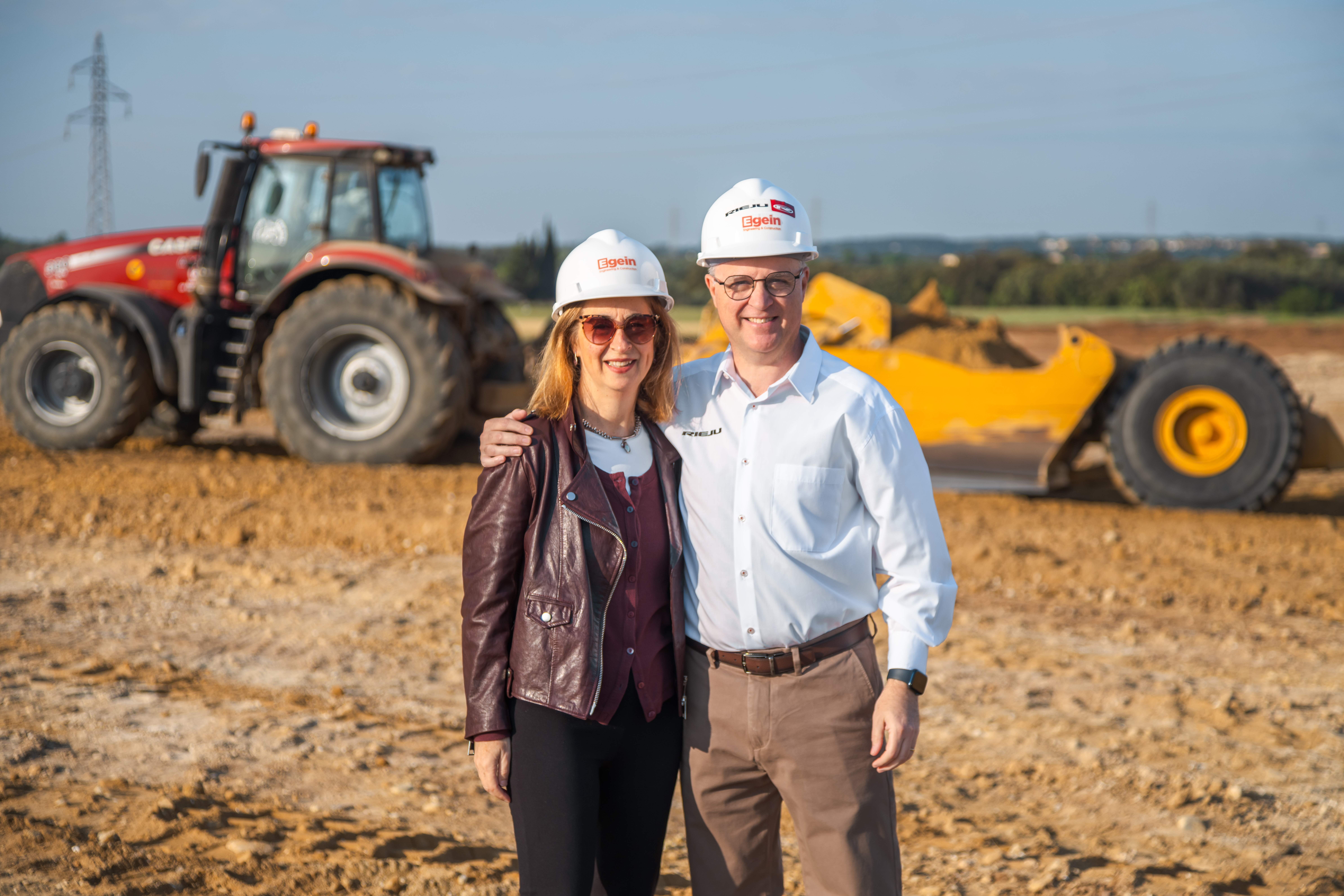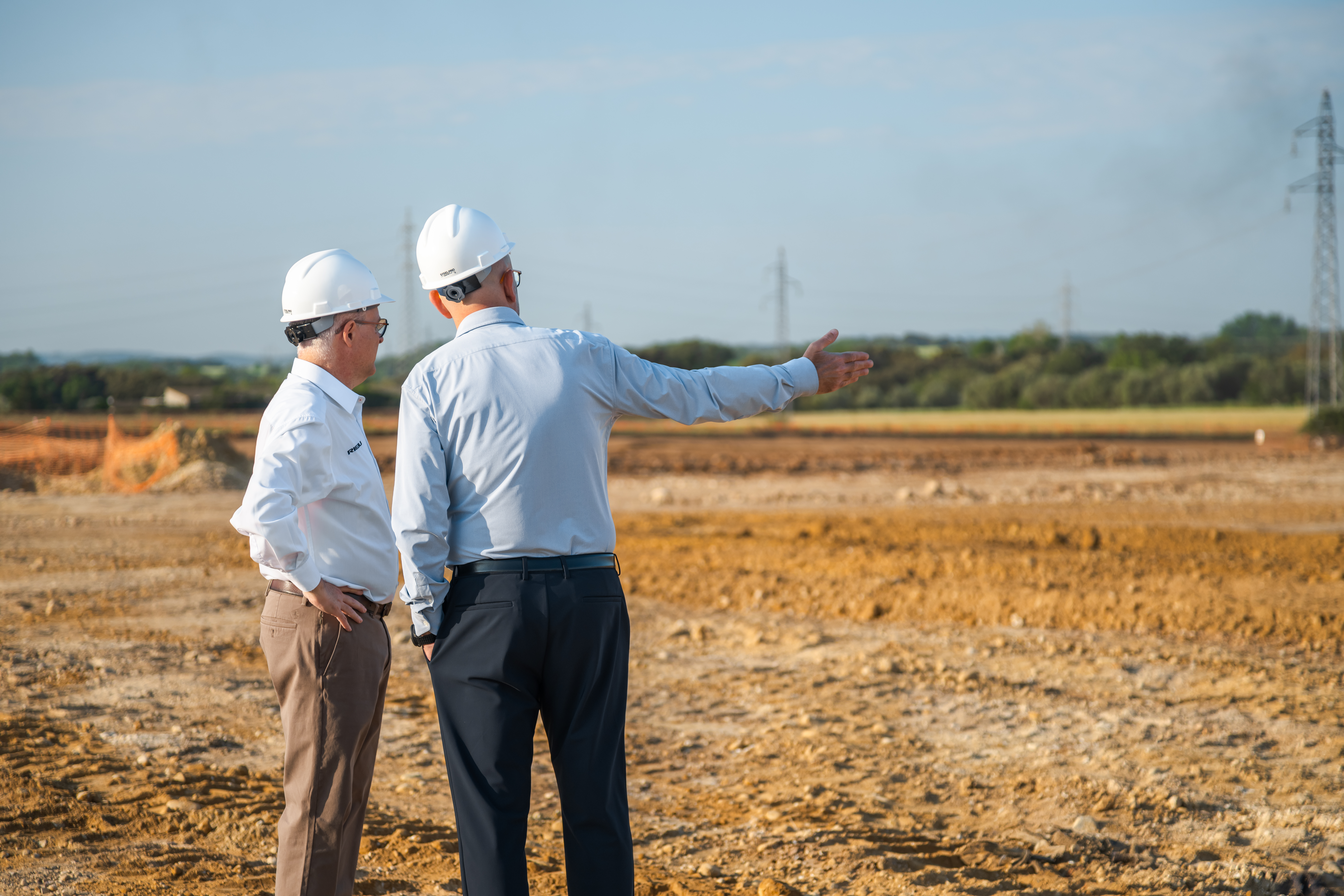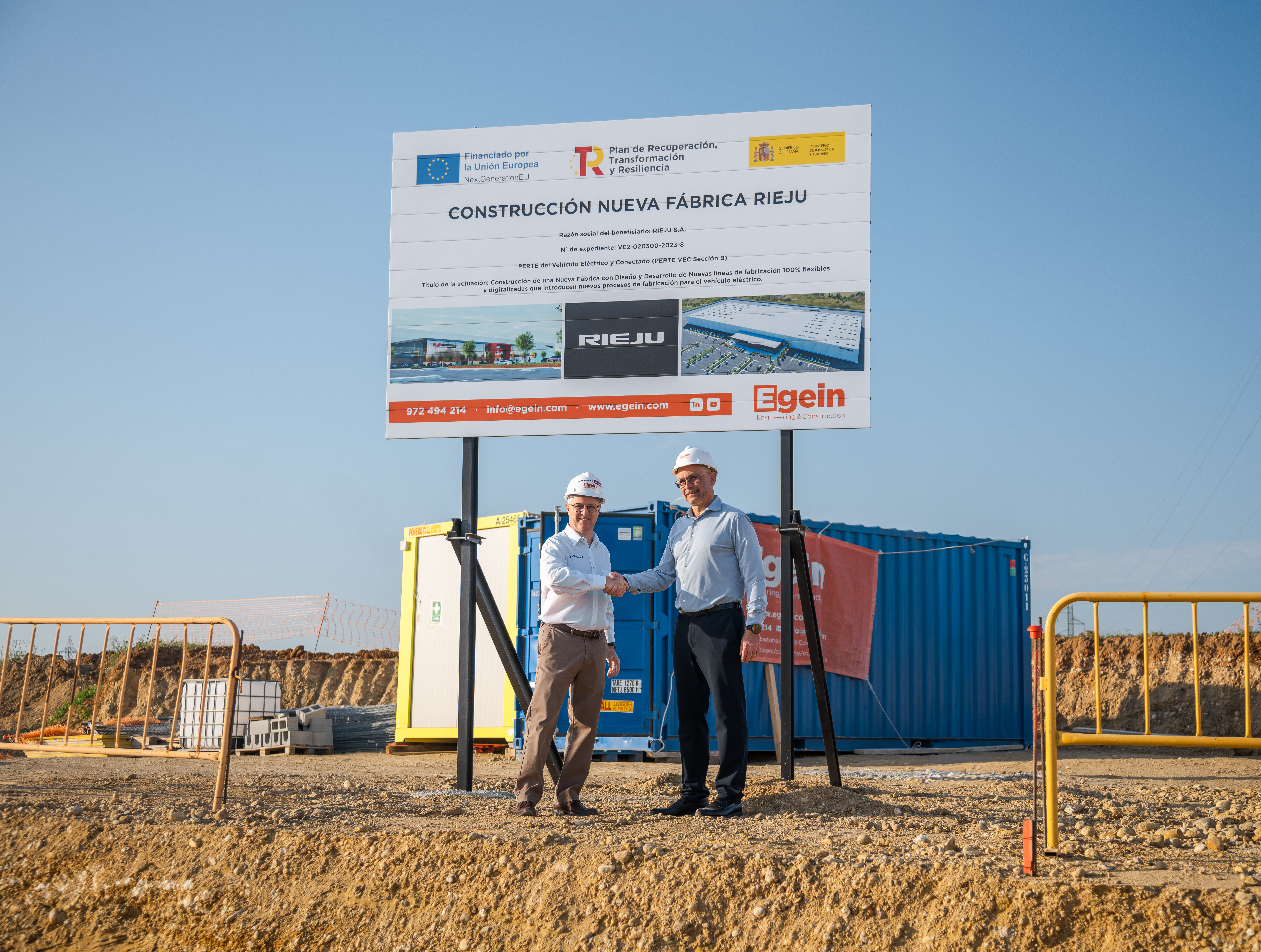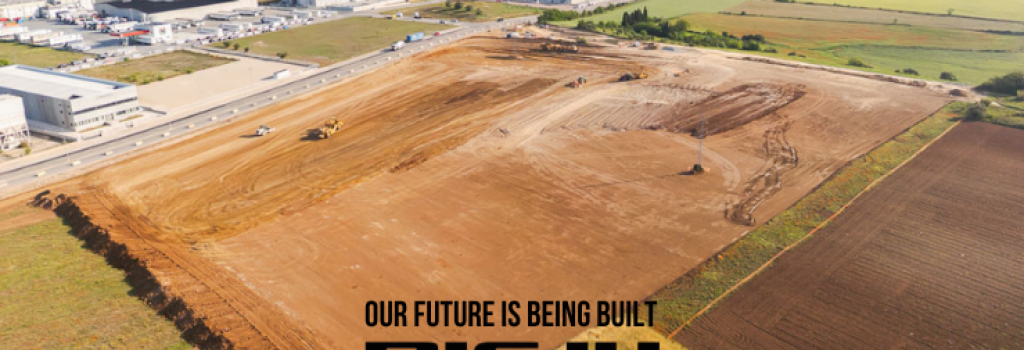
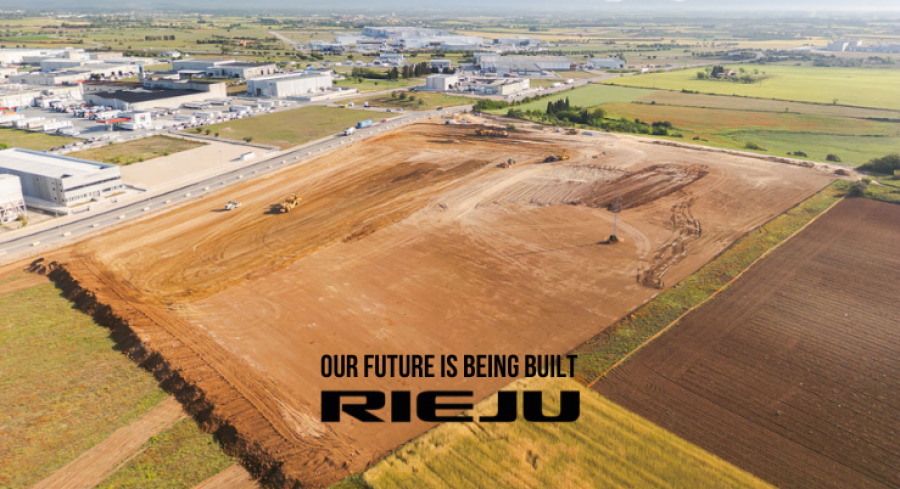
The project is currently in its initial phase, with earthmoving works already underway, paving the way for the development of a key facility for the company’s future. This progress represents a strategic investment aimed at strengthening production capacity, adapting to new technological needs and supporting the brand’s evolution in international markets.
The start of the construction works was attended by Jordi Riera, CEO of RIEJU, and David Garrido, CEO of EGEIN, a company specialised in engineering and turnkey industrial building construction, responsible for the development of the project.
“This new factory is a key step in RIEJU’s evolution. It will allow us to increase our production capacity, flexibility and digitalisation, improve our processes and continue growing in the development of new products and international markets without losing our essence or our connection to the territory,” stated Jordi Riera.
Both highlighted the importance of this new infrastructure as a growth driver and as a reflection of RIEJU’s commitment to innovation and industrial excellence.
The architectural design has been developed by architect Montse Riera, who leads the conception of a modern, functional space aligned with the company’s values.
The new factory will be developed on a 71,973 m² plot, with a built surface area of 27,100 m². The project includes two warehouses, a production plant with 5 assembly lines and office spaces, creating an environment designed to optimize production and logistics processes.
The new factory is scheduled to become operational during the first quarter of 2028.
This project represents a strong commitment to the future, innovation and local roots, reinforcing RIEJU’s dedication to the industrial development of its environment and its international projection.
The project also benefits from support through the PERTE for the Electric and Connected Vehicle (VEC), aimed at boosting the transformation and competitiveness of Spain’s mobility industry.